Stape to Anacoic Migration Guide: A Controlled Rollout Plan [2026]
How to migrate from Stape to Anacoic without turning cutover into a risky all-at-once rewrite. A practical rollout plan for agencies and technical teams.
![Featured image for Stape to Anacoic Migration Guide: A Controlled Rollout Plan [2026]](/blog/stape-to-anacoic-migration-guide/hero.png)
Direct answer: do not migrate from Stape by recreating the whole stack in one go. The clean path is to map the current setup, move one high-value signal route first, validate accepted ingress and destination delivery, then retire the old path gradually.
Stape is a legitimate choice for teams that want a hosted sGTM-centered workflow. But many teams eventually want a more direct product-led control plane with clearer operator visibility and less GTM overhead. That is when migration becomes worth considering.
If you still need the commercial comparison first, read Anacoic vs Stape Comparison. This article assumes you already know why you may want to move and focuses on how to do it without introducing unnecessary risk.
Table of Contents
- What usually drives the migration
- What to map before touching production
- How the rollout should work
- Stape to Anacoic mapping table
- Cutover checklist
- Common blockers during migration
- When not to migrate yet
- FAQ
What usually drives the migration
Teams typically start this migration when one or more of these become true:
- GTM has become the operating center instead of just one implementation tool
- each destination feels like its own mini-project
- debugging depends on too many separate interfaces
- onboarding new operators is slower than it should be
- the business wants one cleaner first-party signal path with clearer health and review surfaces
The move is rarely about “more features.” It is usually about a better operating model.
What to map before touching production
Before the first cutover step, document the current stack in plain language:
- which signals matter most
- where those signals originate now
- which destinations receive them
- what identifiers are used for matching and deduplication
- which GTM logic or Stape-specific behavior is still important
- what counts as a healthy live delivery
If you skip this step, the migration turns into guesswork.
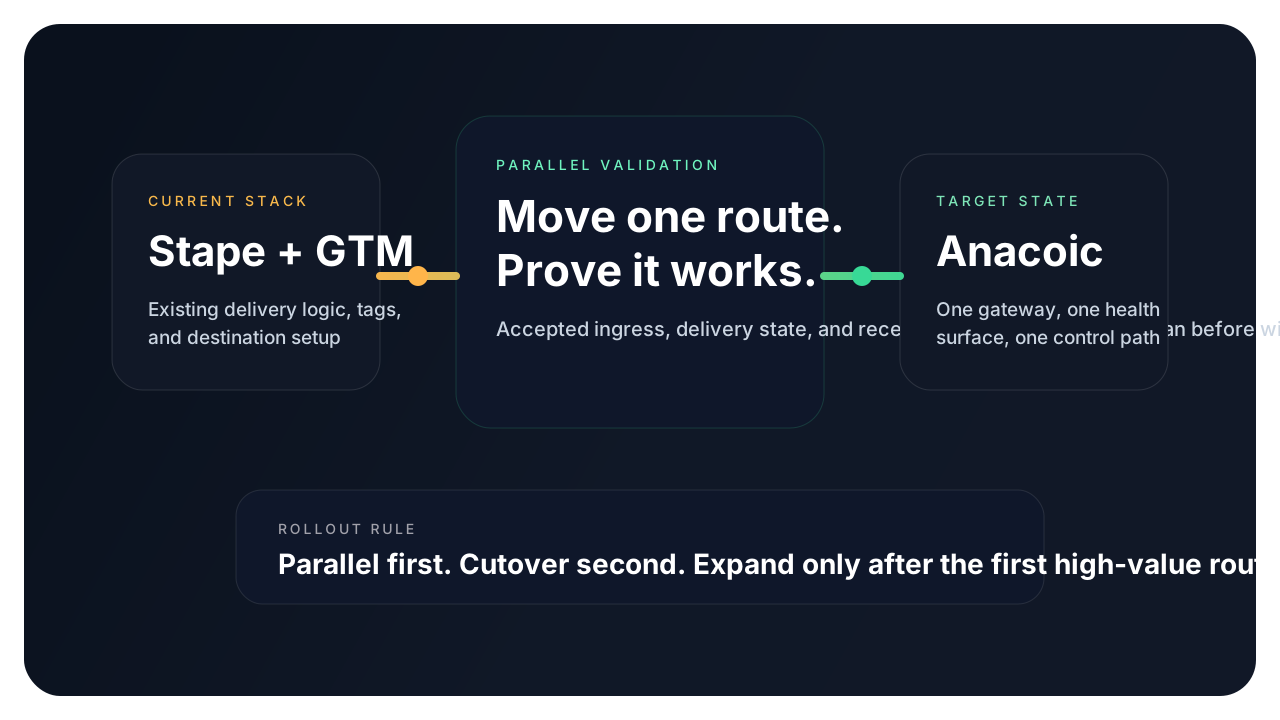
The safest migration is parallel first, cutover second. Move one path, validate it, then widen the rollout.
How the rollout should work
The controlled rollout sequence looks like this:
1. Create the new gateway first
Do not start by deleting old logic. Stand up the new path so you can validate it independently.
2. Connect the first destination set
Start with the destinations that matter most to the business right now. For many teams, that is Meta plus one or two additional ad or analytics endpoints.
3. Move one high-value signal route
Use the cleanest route first:
PurchaseInitiateCheckout- one important lead or subscription signal
4. Validate the route end to end
Confirm:
- accepted ingress
- signal shape
- delivery status
- blocked or rejected requests
- destination acceptance
5. Expand only after the first route is healthy
Do not copy the old setup line for line. Rebuild only what the business still needs.
For deeper setup help during the rollout, the practical docs are:
Stape to Anacoic mapping table
| Current stack area | Stape-centered model | Anacoic migration target |
|---|---|---|
| Primary operating layer | Hosted sGTM or related routing flow | One gateway and one direct signal control plane |
| Destination management | Often GTM-centered | Destination configuration in the app and one normalized route |
| Validation workflow | Multiple tools depending on the setup | One recent-activity, health, and diagnostics workflow |
| Cutover style | Often tag and container oriented | Signal-path oriented |
| Future AI/agent operations | Not the main product shape | Part of the broader platform direction |
The point is not to preserve every historical implementation artifact. The point is to keep the business-critical routing behavior while reducing complexity.
Cutover checklist
Do not remove the old path until this checklist is true for the first migrated signal:
- accepted ingress is visible on the new gateway
- signal naming is normalized and intentional
- required identifiers are present
- the destination accepts the signal
- the operator can review recent activity and explain failures
- blocked or rejected requests are distinguishable from captured signals
- the team has documented the next three signals to migrate
Only after that should you widen the rollout to additional signals or destinations.
Common blockers during migration
Trying to migrate everything at once
This is the most common self-inflicted problem. Cutover should happen by signal path, not by ambition.
Recreating old GTM logic without questioning it
Migration is the right time to remove stale branches and implementation debt, not only to copy it.
Forgetting the security model
If allowed origins, custom domains, or validation traffic are not aligned early, the new path can look broken even when the transport itself is fine.
Measuring success only by vendor dashboards
Destination dashboards matter, but the operator also needs a trustworthy local truth: accepted ingress, blocked traffic, delivery state, and recent activity in one place.
When not to migrate yet
Hold the migration if:
- the current Stape stack is stable and low-friction
- the team cannot currently describe the must-have signal set clearly
- nobody owns rollout validation
- the business is about to enter a high-risk seasonal revenue window
The best migration is boring, not heroic.
If you are still evaluating whether the move is justified, compare the operating models first:
FAQ
What should migrate first?
Move the highest-value signal path first, usually purchase or checkout, because that is where rollout proof matters most.
Do I need to keep GTM in the loop?
Not always. Some teams keep parts of their existing GTM model during transition, but many migrations are cleaner when the new path becomes more direct.
How long should the old path stay live?
Long enough to validate the new route cleanly. The goal is controlled overlap, not indefinite duplication.
What if the migration is mainly about clearer diagnostics?
That is a valid reason to migrate. Many teams move because they want one clearer operating surface, not just a different way to forward the same payload.
What should I read after this?
Open Quickstart Ads for rollout steps, then review Troubleshooting before the first production cutover.